

Is melamine faced chipboard good for making cabinets?
Nov 05, 2026
Leave a message
Hey there, if you’ve ever been shopping for cabinets lately, you’ve probably seen melamine faced chipboard (MFC) pop up everywhere – and if you’re like most folks, you might’ve wondered: is it actually good enough for cabinetry? As someone who’s been in the melamine faced chipboard game for years (I’m not gonna pretend to be a scientist, but I’ve talked to hundreds of carpenters, homeowners, and kitchen designers about this stuff), I’m here to break it down straight – no fancy jargon, just real talk.
First, let’s get one thing clear: I see people argue about MFC all the time. Some folks swear it’s the worst cabinet material ever, others swear by it. The truth? It’s not a one-size-fits-all, but it’s way more solid than a lot of bad reviews make it sound. Let’s start with the basics, though – what even is melamine faced chipboard for cabinets? For context, our go-to standard size is the classic 8x4 Melamine Faced Chipboard (that’s the industry term for 8-foot by 4-foot panels, for anyone who’s not buying building materials every day), which is basically a core of compressed wood chips (that’s the “chipboard” part) with a thin, hard melamine resin layer melted and pressed onto both sides. The melamine is the star here – it’s not just a pretty coating, it’s a durable, scratch-resistant barrier that doesn’t need painting or staining.
Now, let’s cut to the chase: is it good for cabinets? Let’s start with the pros, because that’s where MFC really shines. First off, price. If you’re renovating a kitchen on a budget, you can’t beat MFC cabinets. Solid wood cabinets can run $150–$300 per linear foot, but MFC cabinets are often half that – sometimes even less, depending on the finish. That’s a huge win for homeowners who want a nice look without breaking the bank. And the melamine finish? It’s impossible to beat for low maintenance. I’ve seen MFC cabinets with kids, dogs, coffee spills, you name it – a quick wipe with a damp cloth and they look good as new. The melamine doesn’t chip easily (though it can if you drop something super heavy or sharp directly on it), and it resists moisture way better than raw particleboard – though, important note, the edges are still the weak spot here, which brings me to the next point.
Another big pro: consistency. With our Melamine Mfc Board, you get panels that are perfectly uniform in size, color, and finish, every single time. No knots, no warping, no weird grain variations like you get with solid wood. That’s a game-changer for cabinet installers – they can cut the panels to exact measurements without worrying about the wood shifting, which speeds up the whole project and leads to a cleaner, more professional finished look. Plus, the design options are insane. You can get melamine in literally any color you want – matte white, high-gloss black, wood grain that looks exactly like oak or walnut, even funky patterns like concrete or marble. So if you’re going for a modern, minimalist kitchen or a cozy farmhouse vibe, there’s an MFC finish that’ll match.
But wait, no material is perfect, so let’s talk about the downsides – because you need to know the bad before you decide. First, that core: chipboard (particleboard) is made from compressed wood chips, and it’s not as strong as plywood or solid wood. If you’re hanging heavy things on your cabinets – like a huge mixer, or heavy pots and pans – the MFC might not hold up as well. The issue is the screw holes: once you drill a screw into MFC, the raw chipboard core (if it’s not properly sealed) can swell if it gets even a little moisture, and the screw can pull loose over time. That’s why good MFC cabinet makers edge the panels with PVC or melamine edge banding – it seals the raw edges so moisture can’t get in. If you have cheap cabinets with no edge banding, that’s a problem, but that’s not a flaw in the MFC itself – that’s a flaw in how it’s installed.
Another downside: you can’t refinish melamine. If your MFC cabinets get scratched, or you just get tired of the color in 10 years, you can’t sand them down and repaint them like you can with solid wood. The melamine layer is too hard and thin to sand, so you’d have to either replace them or cover them with peel-and-stick vinyl (which works, but it’s an extra step). That’s a big one for people who like to update their kitchen every few years – MFC isn’t as flexible in that regard. And also, if you get a chip in the melamine, it’s hard to fix without professional repair, whereas a small scratch on solid wood can be sanded out.
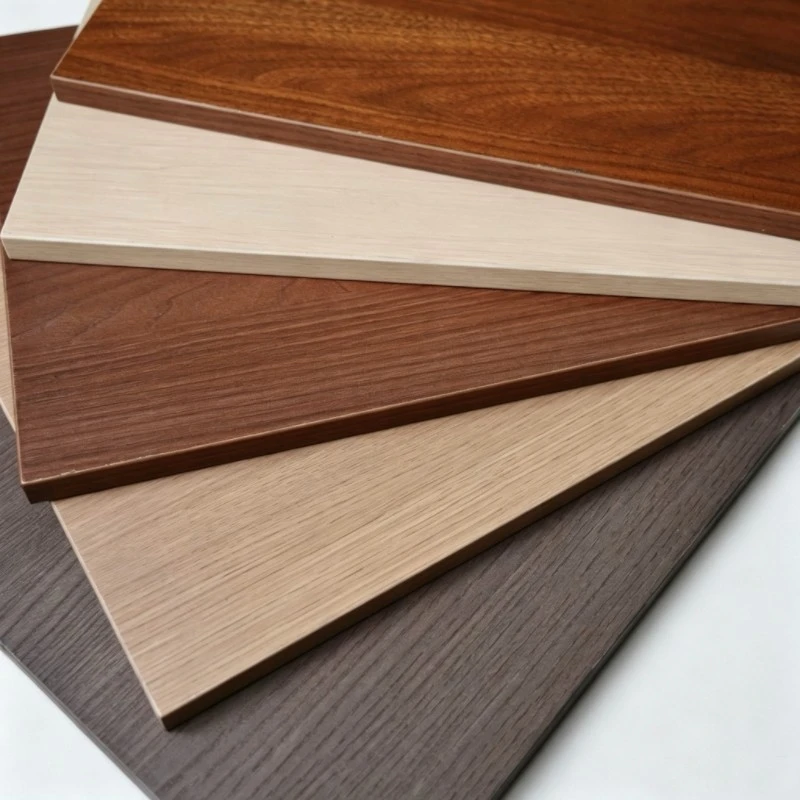
Now, let’s address the big question: is it durable enough for daily use? I’ve seen MFC cabinets that have been in homes for 15 years that still look great, and I’ve seen ones that got ruined in 2 years because of poor installation or exposure to too much moisture (like right next to a sink with no proper sealing). The key is how it’s made and installed. Our Melamine Laminated Chipboard panels are made with high-density core and thick melamine layers, so they’re more durable than cheap, thin MFC. If you buy cabinets made with quality MFC, edge banding, and proper installation, they can last a decade or more – which is way longer than some people think.
Wait, let’s also compare it to other common cabinet materials, because that helps put it in perspective. Plywood is more durable, but it’s heavier, more expensive, and can have grain variations that make finishing trickier. Solid wood is beautiful, but it’s pricey, can warp in high humidity, and needs regular maintenance. Thermofoil is similar to MFC, but it’s a vinyl layer, so it can peel or bubble if it gets too hot (like next to a stove). MFC doesn’t have that issue – it’s more heat-resistant than vinyl, so it works better near kitchen appliances, as long as they’re not directly touching the surface.
So, who should go for MFC cabinets? If you’re on a tight budget, you want low maintenance, you like consistent design options, and you’re okay with not being able to refinish them later – MFC is a solid choice. If you’re building a high-end kitchen that will be the centerpiece of your home for 20+ years, or if you plan to move and renovate in the next 5 years, you might want to look at solid wood or plywood. But for most homeowners, MFC is a great middle ground – it checks all the boxes for a functional, nice-looking kitchen without draining your bank account.
As a supplier, I’ll be straight with you: I don’t sell MFC and tell everyone it’s perfect, because that’s not fair. I tell customers about the pros and cons, because that’s how you make a good decision. The best MFC cabinets are made when you pair a quality melamine core with proper edge banding and a good installer. If you skip the edge banding, you’re asking for moisture damage. If you use cheap, thin melamine, it’ll scratch easier. But when you get it right, MFC is one of the best values in cabinet materials out there.
At the end of the day, the biggest thing to remember is that “good” depends on your needs. If you’re looking for a cheap, low-fuss cabinet that works for everyday life, melamine faced chipboard is absolutely good for making cabinets. If you want something premium and long-lasting, it might not be for you – but that’s okay, no one material works for everyone.
If you’re considering MFC for your next cabinet project, whether you’re a homeowner doing a kitchen reno or a contractor sourcing materials for a build, feel free to reach out to our team to talk through your specific needs. We can help you pick the right panel size, finish, and type – from our standard 8x4 Melamine Faced Chipboard to our custom Melamine Mfc Board and durable Melamine Laminated Chipboard options – so you get exactly what works for your project. Don’t stress too much about it, MFC has come a long way from the cheap particleboard of the past, and when done right, it’s a great choice for cabinets.
References
- "Melamine Faced Chipboard: A Comprehensive Guide for Furniture Applications" – Wood Industry Journal, 2022.
- "Comparative Analysis of Cabinet Materials: Durability, Cost, and Maintenance" – Home Improvement Research Institute, 2023.
- "Edge Banding Best Practices for Melamine Panel Installation" – Cabinetmaker’s Monthly, 2021.